
Learning Poetry: Resources for Learning to Write Poetry
Sean Glatch | February 25, 2026 |
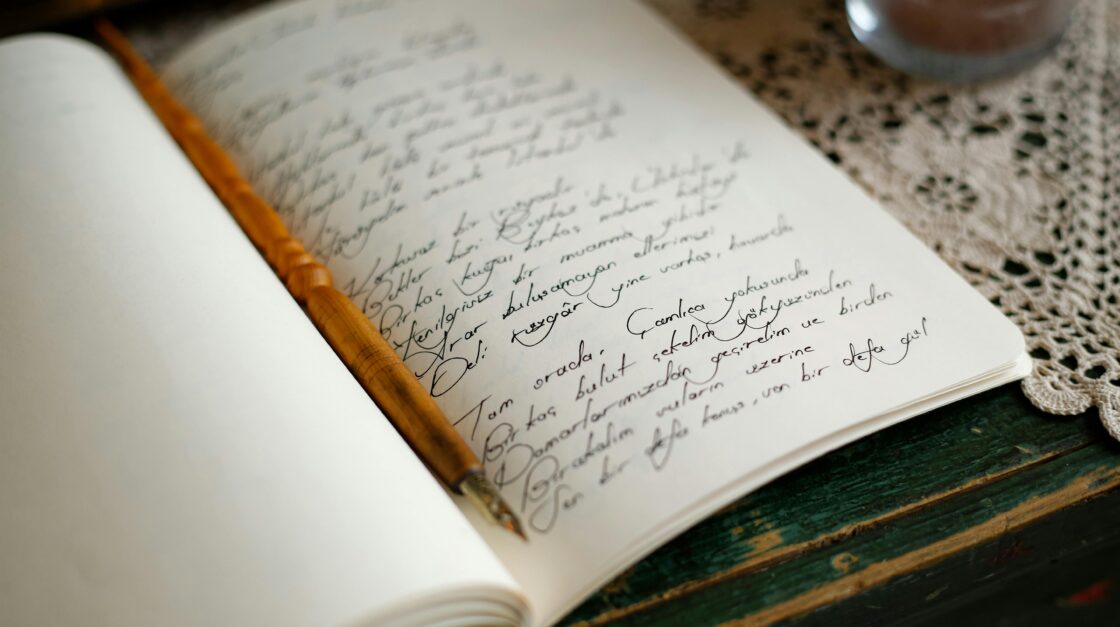
There’s no secret to learning poetry, other than reading a lot and writing a lot. But what poetry should you read, and how do you approach the awesome craft of writing it?
This craft guide offers numerous resources for learning to write poetry. We’ll begin with poetry’s essentials, then move through the work of writing, revising, and deepening the craft.
Along the way, we’ll have tips for how to best learn poetry, regardless of where you are in your poetry journey. Here is the Writers.com craft guide for learning poetry.
Learning Poetry: Contents
Learning Poetry: The Basic Elements of the Craft
First of all, what is poetry?
This section guides you to resources on line breaks, images, language, and literary devices. But, if you’re wondering how to define poetry (or how to define it for yourself), start at this guide through the genre:
Line Breaks
Poetry differentiates itself from prose through one essential device: the line break.
Line breaks create much of poetry’s possibilities and distinctions from prose. In fiction and nonfiction, a line of text is broken arbitrarily by the edge of the page; poets decide when and how the line breaks. As a result, a line is its own unit: it can contain multiple sentences or only be part of a longer one; it stands on its own and is juxtaposed with the lines around it, creating multiplicities, dualities, tensions, and oppositions.
Our craft guide on the line break walks you through this essential device:
Language
Poetry, of course, is composed of language. But there are countless decisions that happen within poetic language: the work of word choice, the employment of effective imagery, and the use of literary devices all compound to make a poem successful.
Article continues below…
Poetry Writing Courses We Think You'll Love
We've hand-picked these courses to help you flourish as a writer.
Finding Your Poetic Temperament: Unlock Your Most Powerful Poetry
What kind of poet are you: an imaginer, a storyteller, a musician, or a builder? Discover your own poetic temperament...
Find Out More
Toward Your Poetic Vision: A Guide Through the Poetic Life, from Craft to Publication
Write your most powerful poetry in this in-depth guidebook to the poet's craft and life.
Find Out More
The Joy of Poetry: A Beginner-Friendly Workshop
Have you wanted to get into poetry, but don't know where to start? Learn the craft from the Joy of...
Find Out MoreOr click below to view all courses.
See CoursesArticle continues…
At the level of the word, poets play with language because plain language so often fails to convey what we need it to. Shakespeare coined over 1,700 words. Conversely, Bradley Trumpfheller’s poem “Tomorrow, No, Tomorrower” invents the words “goldishness,” “huckle-buckle,” “gladracket,” and “spitshine” in a poem whose precarious syntaxes beckon towards queer joy.
Here is our guide for understanding poetic wordplay, including 10 useful devices to try out in your writing:
The work of word choice, moreover, requires a careful attention to words: what they mean, what they don’t, and what we need them to say. Our guide on diction offers further advice on how to nail down the smallest particle of poetry, the word:
Words, of course, are what compose images in poems. We use words to create, describe, and juxtapose the senses, weaving those senses into worlds. Contemporary poetry in particular is interested in the primacy of image, so consider, also, our guide on this essential device:
Literary Devices
Poetry is often celebrated for its intricate metaphors and artful language—literary devices, in other words. A poem does not need to have a metaphor for it to be a poem, but literary devices, when wielded effectively, can enhance a poem and heighten its impact on the reader.
We have a masterlist of literary devices for you to review here:
116 Common Literary Devices: Definitions, Examples, and Exercises
If you would like to get in the weeds of poetic devices, this list is specific to common strategies poets use to write effective poetry:
And, because metaphor is such a common device, read our in-depth guide on the topic here:
Learning Poetry: Understanding Form, Rhyme, and Meter
Although the line break is what creates the basic units—lines—of poetry, a poem is more formally rich and complicated.
Form describes the “container” of a poem: the artful, intentional ways that a poem is constructed to convey meaning. You may have already heard of some forms, like the sonnet or the villanelle. But all poems have a form, including free verse poems, whose architecture is less apparent but still fundamental to the poem’s success.
You may have also heard of some elements of highly formal poetry, such as rhyme and meter. If you are interested in writing formal poetry, or want to understand what iambic pentameter actually is, start with this guide:
Form takes a wide variety of shapes, sizes, and possibilities. From the small-but-mighty haiku to the difficult-to-construct sestina, this article offers a guide through some of the more common poetry forms:
If you find yourself intimidated by highly formal poetry, or your own poetic inclination is more free form, our specific guide on free verse poetry will help ease you into writing new drafts:
How to Write a Free Verse Poem: Writing Poetry Without Fixed Form
Lastly, although poetry is defined by the broken line, there exists an in-between called the prose poem, which, in lieu of the line break, relies on tensions and intuitions of language to achieve what poetry achieves. Learn more about it here:
Learning Poetry: How to Read a Poem
If you have a good grounding in poetry’s form and devices, it is important to give yourself a grounding in how to actually read poetry.
Of course, anyone can read poetry and understand it. But your poet’s journey will be greatly enhanced by being able to read, dissect, and engage with poetry at a deeper level. The more poetry you read, the more ideas and possibilities emerge in your own writing.
Really, all of our craft articles on reading poetry are useful for learning how to read poetry. But this guide helps you think through poetry at its most fundamental levels:
Knowing how to read poetry is one thing, but finding where to read poetry is another. Luckily, the poetry world is quite expansive on the internet.
As such, here’s our guide on poetry journals to submit to. Treat this also as a guide for finding journals where excellent poetry is consistently published:
In a similar vein, you can navigate the world of contemporary digital publishing at Chill Subs, which serves as an archive and database of many literary journals (for poetry and prose):
Finally, if your tastes are pre-1920s, Gutenberg is a great digital archive of classical, open domain poetry:
https://www.gutenberg.org/ebooks/bookshelf/60
Learning Poetry’s Lineages
Poetry has not evolved in a vacuum: it has evolved through its historical, political, and aesthetic contexts, each poet reading and reacting to each other to create new possibilities in language.
In other words, poetry has changed a lot over the past several millennia—and will continue to change a lot even in the next few years. For a deeper, richer, more thorough grounding in poetry, studying its histories and lineages will expand the possibilities of your own poetry—and give you some new prompts and inspiration as well.
Modern American Poetry has a useful collection of brief essays on 20th century poetry movements. The essays themselves are sparse, but they link to essential poets and poems that defined some of the 20th century’s inquiries into language:
https://www.modernamericanpoetry.org/
In a similar vein, the University of Toronto has this great timeline of poets and poems throughout the history of the English language. It does not offer much in the way of definitions and analysis, but can serve as another starting point for knowing where, when, and how poetic movements are delineated:
https://rpo.library.utoronto.ca/content/timeline-poetry
Otherwise, there are some great anthologies that go much deeper than the internet. Poems for the Millennium is great for studying the 20th century. To go earlier than this, the Norton Anthology of Poetry is richly historical—and available for free on the Internet Archive.
Learning Poetry: How to Craft Successful Poems
Poets hone their craft throughout their lives. Indeed, what you write now will be markedly different from what you write a year from now, five years from now, ten, twenty. So know that you will forever grow and evolve simply through the work of writing poetry.
Nonetheless, how do you write a poem? Here are a number of guides on crafting and inspiring successful poetry.
First, our in-depth guide on the process of the craft:
If you’re struggling just to get the first words down, however, start here:
Additionally, you may be interested to know about the difference between the initiating and the generated subject. Learning this distinction will hopefully empower you to write towards your own intuitions, and away from any sort of “aboutness” you need your poem to have. Learn more here:
Resources for Finding Poetry Inspiration
Learning to write poetry is a lot easier when you have something to write about. As such, we’ve curated a few lists and websites that help when you’re seeking inspiration.
Here’s our guide on poetry inspiration:
We also appreciate certain modes of poetry generation, such as found poetry, that make language play fun and accessible. Here’s our guide on the topic:
Relatedly, my own website, Poemancer, has an archive of guided prompts to help you further read, write, and engage with poetry:
https://poemancer.com/divinations/
Lastly, I really like how open-ended the poetry prompts at Language is a Virus are:
https://www.languageisavirus.com/poetry-writing-prompts/
Revising Poetry
So you have some first drafts. Now what?
Your first draft is the one where you discover what you want to say. Revision is a process of figuring out how you want to say it—and, sometimes, you revise a poem and realize there’s plenty you haven’t yet said.
Really, the revision process is one of ongoing engagement with your work. Some poems come out perfect, but plenty more poems require multiple sessions of rewriting and revising, as well as feedback from fellow poets.
How do writers revise towards publication? First, read our guide, which is applicable to both poets and prose writers of all backgrounds:
I have also put out this craft essay, with prompts for revision:
And, Rachel Richardson has a smart craft essay on the topic of poetry revision here:
https://www.poetryfoundation.org/articles/70305/the-warmth-of-the-messy-page
Mindset Advice for Learning Poetry
Like many things, poetry is learned best with an open mind and a playful disposition. But what does that mean in practice?
The more you read poetry—both classic and contemporary—the more you will encounter words, ideas, structures, and poetic approaches that do not make much sense. And, the more that you write poetry, the more you might find yourself trying, failing, and trying even harder to push the boundaries of language.
This friction and frustration is not only part of the process, it is often the best part of learning poetry.
Successful poetry necessities a mindset of play and openness to the unknown. The line break is not just a tool of verse, it is an invitation to challenge linear language. With this invitation, the poet can do all sorts of other incredible things: invent new words, develop new forms, juxtapose unexpected images, etc.
In my opinion, the best poetry interrogates reality instead of trying to speak from a place of already-knowing. Whenever I use poetry to say something familiar or expected, the writing always falls flat, more prose-like or didactic than poetic.
Another way of saying this is, all art is an epistemological form: we discover something or generate insight through the creative process, and thus need a spirit of inquiry to guide the art forward.
When you find yourself resisting friction, or are made to feel nervous or insecure by ideas you don’t understand, encourage yourself to do the opposite: embrace mystery, write into difficulty, engage with complexity, and let poetry guide you towards a richer understanding of the world.
For a similar way of articulating this approach to poetry, check out our article on Negative Capability:
Classes for Learning Poetry
Learning to write poetry doesn’t just happen online or in books—it happens in the classroom. Take a look at our upcoming poetry writing courses, where you’ll get expert guidance and feedback on the poems you write.
Also check out my self-guided course Toward Your Poetic Vision, which offers a grounding in poetry’s craft, lineages, and inspirations, as well as hundreds of prompts to accompany you on your poet’s journey.
