
What is Autobiographical Fiction?: Writing the Fictional Self
Sean Glatch | September 15, 2026 |
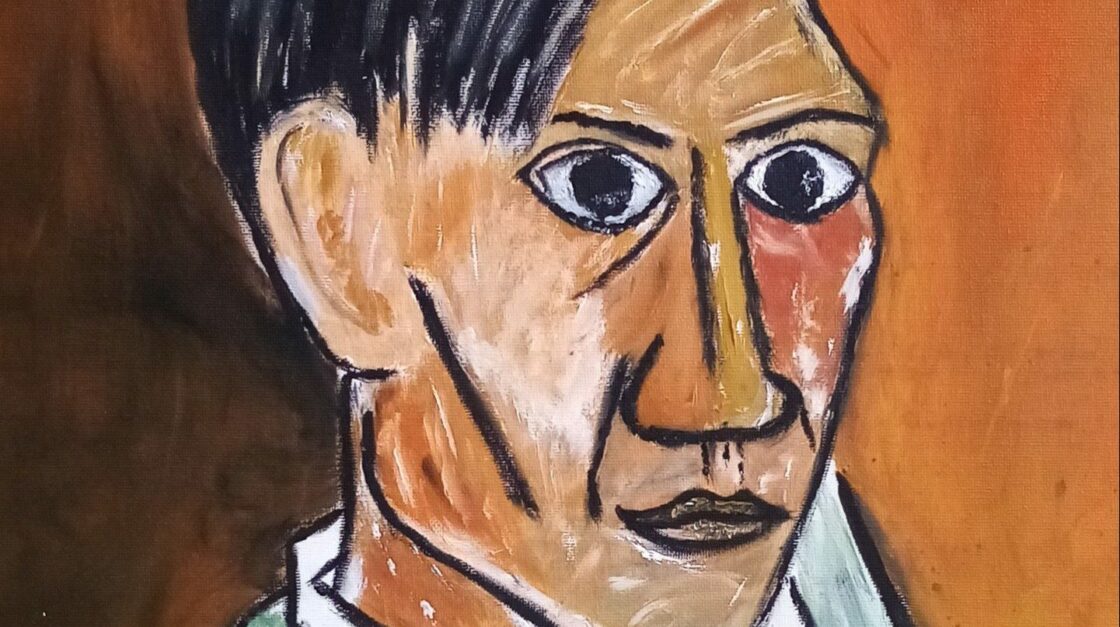
It’s been said that every work of fiction is emotionally autobiographical: a storyteller may invent stories that never happened, but always conveys an emotional truth founded on lived experience. It only makes sense, then, that some storytellers best uncover their feelings through autobiographical fiction.
Autobiographical fiction seems paradoxical. How can a story be fictional if it happened in real life?
But there’s no better place to explore paradoxes and uncover deeper truths than in writing. This article explores the nature of autobiographical fiction, a hybrid genre of fiction and nonfiction that creates art out of the raw material of an author’s life.
Along the way, we’ll look at the continuum that exists between fiction and nonfiction—put another way, between truth and falsity. But first, what is autobiographical fiction?
What is Autobiographical Fiction?: Contents
What is Autobiographical Fiction?
At its simplest, autobiographical fiction (also called autofiction or ABF) is a fictional story based on the real life events of the author. Autobiographical fiction is based on fact—but, importantly, not bound by fact.
Autobiographical fiction is based on fact—but, importantly, not bound by fact.
It’s hard to define autofiction precisely: ABF describes more of a spectrum than a genre. An autofiction writer may choose to write about their life and simply change some names, embellish some descriptions, and alter the location. Or, writers of autobiographical fiction might loosely base their story on real life events, but they will change the plot, add additional characters, and explore storylines that did not transpire in real life.
What’s true in all works of autobiographical fiction is that the fictional aspect of the story gives the author psychological distance from real life.
Fiction is a way of holding the world at arm’s length: we use it to clarify our thoughts and uncover truths that might not be found in strict adherence to reality. This goes in both directions, as some works that are explicitly nonfiction also include speculative and fictional elements.
There’s a continuum of truth between fiction and nonfiction that ABF occupies. Let’s look at that briefly, with examples of autobiographical fiction to demonstrate this genre’s wide berth.
Article continues below…
Autobiographical Fiction Courses We Think You'll Love
We've hand-picked these courses to help you flourish as a writer.

The Body and Soul of Your Memoir: Shape, Focus, and Write Your Memoir
Unearth your memoir's soul (its main focus and calling) and body (its organization and structure) as you write toward a...
Find Out More
From Memory: Writing Fiction or Memoir from Lived Experience
In this course, you'll use a nearly infinite resource—your own memory—to craft compelling fiction or nonfiction stories.
Find Out More
Write Your Memoir in 16 Weeks: Bring Your Story to Life
Write your memoir in 4 months. Discover the heart of your story, and submit up to 4,000 words biweekly week...
Find Out MoreOr click below to view all courses.
See CoursesArticle continues…
The Autobiographical Fiction Continuum
Below are some possibilities within autobiographical fiction, arranged from most to least fictional.
1. Fiction: The Author Surrogate
Some writers choose to insert self-inspired characters into a mostly-fictional story. An author surrogate is when an author writes a character into their story for the sole purpose of having that character espouse the author’s beliefs. This character does not have to be major to the story, but they do play an important role in advancing the story’s themes and arguments.
A great example of the author surrogate is Nick Carroway, the first person narrator of The Great Gatsby. F. Scott Fitzgerald uses Carroway to comment on the story’s themes of greed and relationships. Though Carroway is distinct from Fitzgerald, he is the character that expresses and embodies Fitzgerald’s moral view of the story’s situations.
There’s a danger, here, of being moralistic. A novel benefits from moral seriousness, but moralizing—that is, directly imparting moral concerns and expressing a binary of good and not-good—often derails works of fiction. Carroway works as an author surrogate because Carroway is also a flawed character: he is blindsided by the stakes of The Great Gatsby, and his own moral viewpoint is imperfect.
Another example is Levin in Leo Tolstoy’s Anna Karenina, who similarly represents Tolstoy’s views and philosophies without sacrificing the novel’s moral clarity.
2. Fiction: The Self-Insert
The self-insert is often confused with the author surrogate, since both literary techniques rely on the author embodying themselves as a character in the book. However, the self-insert is a bit more obvious than the author surrogate.
The self-insert is a character that is very obviously the author themselves. An author surrogate, by contrast, is a character that is meant to espouse the author’s views while still being a distinctly fictional person.
A famous example of this is Stephen King’s The Dark Tower series. At several points in King’s heptalogy, a character named “King” talks about himself in relation to the greater narrative and is imbued with many of the author’s own traits, from his physical descriptions to the way he talks. In a story as genre-bent and metaphysical as The Dark Tower, it makes perfect sense for the author to write himself in the story.
3. Semi-Autobiographical Fiction
Semi-Autobiographical Fiction (SAF), also known as roman à clef , is any work of fiction where the central elements—but not the entirety—of both the narrator and the plot are based on the author themselves. This is “semi” because the author may explore hypotheticals, introduce fictional characters, or else digress from what happened in real life.
Sylvia Plath’s The Bell Jar is an example of a semi-autobiographical novel. Much of the plot, as well as many of the characters, resemble Plath’s own life and struggle with mental illness.
4. Autobiographical Fiction
At a further end of the spectrum is completely autobiographical fiction. In this form of fiction, the author pulls directly from their life experiences and makes primarily aesthetic changes. Names, dates, and locations will be muddled, but the plot fully mirrors that of the author’s own life.
In autobiographical fiction, the author pulls directly from their life experiences and makes primarily aesthetic changes. The plot fully mirrors that of the author’s own life.
It’s hard to draw a line between semi- and fully autobiographical fiction. Since readers don’t know the precise details of the author’s life, one can never be quite sure whether certain events of the story are fictional.
For example, Simone de Beauvoir’s The Mandarins accurately examines the dissolution of the French Communist Party, but does she ever embellish her relationship to Jean-Paul Sartre? James Joyce portrays his own moral and aesthetic conflicts in his coming-of-age novel A Portrait of the Artist as a Young Man, but can we trust his literary alter ego, Stephen Daedalus, is telling the full truth? And Elif Batuman’s The Idiot is about the author’s experiences at Harvard, but how much of the novel is fact, and how much is distorted by memory?
The Goal of Truth
In some ways, these questions don’t matter—so long as these novels arrive at truth.
In some ways, these questions don’t matter—so long as these novels arrive at truth.
How do we know that we’ve arrived at truth? Sometimes truth is better felt than named. However, that’s not a satisfying (or rational) answer.
The truth is, truth itself is approximate, more of a journey than a destination, something loftily sought towards but only asymptotically approached. Louise Glück advises in her essay “Against Sincerity” to depart from the facts of life in order to discover the truths of life. And Oscar Wilde famously believed that lying is the best way to tell the truth; to Wilde, Art—which is an ideal form of Truth—can use life as raw material, but Art that tries to reenact life itself will always fail to be Art.
Sure, these are abstract ideas from lofty thinkers. But the point is that fiction gives us space to explore our lives. When we give ourselves room not to hew too closely to the verifiable facts of material reality, then, so long as we maintain the emotional and philosophical truths of life, we might stumble into epiphanies we would not have otherwise had. Such is the value of great writing.
Fiction helps us stumble into epiphanies we would not have otherwise had.
5. Speculative Nonfiction
Like other examples in this article, speculative nonfiction is easier seen as an approach to writing than an all-encompassing genre. Think of it as a mode of literary production.
Speculative nonfiction is nonfiction that includes some form of speculation towards possibilities that may or may not be true. The author, for example, might make educated guesses about: how other people felt; how a story might have ended differently; what truths might exist outside the realm of memory; etc. Or, the author might tell a story that did not happen physically, but did happen mentally, and still arrived at a deeper emotional truth.
Don’t mistake speculation for lying. The speculative nonfiction writer takes the responsibility of uncovering the truth very seriously, and takes pains not to misrepresent the feelings and experiences of themselves of others. For an in-depth guide to the genre, check out this article:
Why Write Autobiographical Fiction?
What is the purpose of autobiographical fiction? Why not just write a memoir or personal essay?
Every writer’s intentions for writing autobiographical fiction are different, but the following are some common reasons.
To Tell More Successful Stories
For many storytellers, the purpose of autobiographical fiction is to create a more satisfying story. That satisfaction is found in the strangeness of truth.
Think of it this way. There might be an aspect of your life that you feel is worth exploring, but whose resolution was anticlimactic or unsatisfying. You want that life story to arrive somewhere more meaningful, more interesting, or even more dramatic. With life as the raw material, a work of autobiographical fiction can then reimagine your story, arranging the characters and situations so that they yield more fruitful conflicts.
As a result, the story achieves a greater epiphany, which, in literature, often corresponds to truth.
Autobiographical fiction can create a more satisfying story that is based in the strangeness of truth.
Autobiographical fiction lets you take your life and write alternate endings, explore “what if?” questions, or pursue different endings. You already know how your story is told, but will you tell it differently after changing X, Y, and Z?
To Create Emotional Distance
Autofiction allows us to explore difficult moments in our lives through the distance of fiction. When nonfiction is too bright, autobiographical fiction can help shade us from our own harsh realities: it creates a degree of separation between ourselves and our personal histories. Fiction gives us opportunities to be more objective about reality.
Fiction gives us opportunities to be more objective about reality.
Autobiographical fiction can also be useful for some writers who want to write with a sense of anonymity. They may be protecting certain names and identities in their stories, and the ABF form allows them to mask otherwise personal details and lived experiences.
To Have Fun With Your Own Narrative
No fun in the writer, no fun in the reader.
Really, you might write autobiographical fiction simply to have fun with writing. Why not reinterpret your life story using the plot of Macbeth? Why not turn a “what if?” into a story that “really” happened? What’s stopping you from injecting yourself into your own fantastical world? Autofiction is just as much of a literary technique as it is an opportunity to enjoy the fiction writing process.
Autobiographical fiction is an opportunity to enjoy the fiction writing process, your way.
Resources for Writing Autobiographical Fiction
These articles and craft guides will help you explore more avenues for telling your (fictional) story.
- The Art of Storytelling
- How to Write a Book About Your Life
- How to Write a Compelling Story
- The Elements of Fiction
- How to Write a Personal Narrative Essay
- How to Write a Memoir
- Memoir Vs Autobiography Vs Biography
- Writing About Real People
- Autofiction as a Doorway Into Truth
- Experiments, Epiphanies, and Inserting Yourself In Your Writing
Write Autobiographical Fiction at Writers.com
Get started writing autobiographical fiction at Writers.com. Our upcoming creative writing courses will help you tell your story—fictional or otherwise.

Hi,
Re: ‘Shot into the darkness.’©SM
Thanks for your tips about writing biographical fiction or ABF. That is always a great “exciter’.
That gave me ana idea, that is not really new, but if it worked could be interesting. Of course, it depends on who is in it.
I would invite someone (who could write) to write a Semi-Biographical-Fiction book. I could write the synopsis as an azimuth, and I would start it, then together, we would finish it. No time no pressure.
Know somebody?
Yes, I ‘know’ how to write. So I would like to pair with someone also who would have some training.
I don’t even need ideas, I lived it.
Hi Sydney, what an interesting idea! I don’t know anybody off the top of my head, however, you are welcome to join our community group on Facebook to discuss your writing ideas! https://www.facebook.com/groups/146546396684638/
Warmest,
Sean
Great article!
My dilemna is how to deal with incovenient truths. Talking about them can expose loved ones and cause strained relationships or even legal action. But leaving out such material will significantly water down the emotional truth you want to convey.
This is the Problem I am having also I am having trouble remembering some of the details of certain stories in my life but it is based upon my trials and tribulations and big mistakes and choices that I made throughout my life I am not sure if I’m going to let anyone in my family read this before I have names changed and tell them that it is partially fictional
Thank you for clarifying the concept of the fictional autobiography/memoir.
I have been assisting my husband who has written a series of books that I have described as an impressionistic account of the people and events of his life as recorded by him in his journals but altered somewhat for the sake of privacy and the exercise of artistic license. As such, I feel they cannot be classified as nonfiction/memoir and are better represented as fictional autobiography/memoir.
A major difficulty arises when submitting the books to self-publishing platforms such as Kindle Direct and Ingram Spark. These platforms do not offer ABF in their listings of categories, nor is there a comparable BISAC subject code. The closest match there is for Biographical Fiction—close, but still not accurate.
Do you have any suggestions for dealing with this?
Thanks
Hi Susan,
This is a great question! And unfortunately I don’t have a great response–self-publishing platforms have a lot of control over how you can market your work.
Part of the reason there isn’t an “autobiographical fiction” category is because it’s not a unique enough genre. At the end of the day, genre categories are marketing tools, and if there isn’t a large enough difference between biographical and autobiographical fiction (other than who’s writing it), self-publishing services won’t bother with the distinction. You might be able to petition one of those services to create the category, but unless a lot of people are asking for that, you probably won’t have much success.
My best advice is to clarify the book’s genre and intent in the actual book description. Search engine optimization is a major component of online retail sites like Amazon and Barnes & Noble; if you hone in on the book’s description and pitch it towards the right audiences, you will be able to make up for the lack of a specific category.
I’m not an expert in KDP or Ingram Spark, so if other authors have more experience working with these platforms, your insight is greatly appreciated.
Best of luck to you and your husband!
Quite educative on ABF.It appeals to me.20 years ago a friend urged me to be a writer but i dismissed the idea ! Today i feel inclined to the idea.
You should definitely do it, Peter!
My name is Bill, I am 73 years of age, ad currently living a retiring life with my wife in Adelaide. Without going into details, I have lived a complex, varied and sometimes difficult life, ending with my current situation here now. Some people I’ve known have suggested that I should write a book of my life, and I have considered doing so. In fact I have attempted on several occasions without success, due to memory loss (amongst other things). My daughter suggested I get someone to help me through the process, eg get a student writer/journelist/etc to help . That sounded like a good idea at the time, but now at home by myself., I’m not so sure.
Am I knocking on the best option doorway?, or, can you suggest where else to seek assistance.
Thanks for much for the autofiction article. I am unable to find an example of a query letter for the genre, Any ideas on where I could find?
This is a terrific examination of autobiographical fiction, Sean. Thank you so much for delving into this subject. I have taken Jack’s class twice. It is a very good class. I recommend it.
Rebecca Hanley
Thank you very much, Rebecca!