Write into the Week: January 11, 2026
Elle LaMarca | January 11, 2026 |
“If you tell the truth, you don’t have to remember anything.”
–Mark Twain
 Dear Writer,
I hope you’re having a good start to your week. In this newsletter:
- A writing prompt to inspire your creativity.
- Reading and listening recommendations in fiction, nonfiction, and poetry.
- Publishing, residency, and retreat opportunities available now.
- Join our free Monday and Friday write-ins, and meet our community of writers.
Happy writing this week!
—Elle, Curriculum Specialist & Community Manager
Writer to Writer: Truth & Authenticity
I think a lot about what it means to tell the truth on the page. Not literal truth, necessarily—many of us (myself included!) are fiction writers, after all—but emotional truth. The kind that feels true in the heart and steady in the body when you read it back. I’m talking about the kind of writing that readers recognize instinctively, even if they can’t quite name why a story feels honest, or why it doesn’t.
Inauthenticity on the page is often subtle, but it almost always falls flat. It can look like writing that’s overly polished and perfected, yet strangely hollow or lacking depth. This can manifest as characters who say the right things but never surprise us; scenes that explain too much while stepping around the emotional core of the moment, or avoid the messiest part of what actually happened altogether; or sometimes it shows up as safe language, familiar phrasing, and tidy conclusions. This happens not because we’re lazy or dishonest writers, but because we’re human. We want to be liked and understood. We want our writing to be loved. We don’t want to hurt anyone, make them angry, or reveal more than we meant to about ourselves. So, we soften the edges, leave things out, and end up telling a version of the story that feels easier to carry.
But readers can feel that distance. They sense when something important is being protected, smoothed over, or left sitting just off the page. They don’t want you to protect them from the details. They want to feel your words and live inside them for a short time.
For me, writing more honestly often means slowing down and asking uncomfortable questions: What am I trying to convey? What details am I avoiding, and why? Did I rush past a moment of emotional depth? Sometimes this results in letting a character behave badly. Sometimes it means keeping an awkward line, an unflattering thought, or exposing desires on the page that I’d personally prefer to keep hidden. Here are a few gentle ways you can practice this kind of honesty:
- Pay attention to the sentences you want to delete immediately. They’re often pointing toward something true that wants to be revealed on the page.
- Let characters and narrators contradict themselves, make bad decisions, lie, or be rude. Let them be real people. Stop worrying if readers will like them.
- Create a mood or Pinterest board with images that represent how you want a particular scene or poem to feel.
- Notice where you’re trying to sound “like a writer” instead of simply putting your own voice on the page.
- Try writing a version that’s just for you. No pressure that you ever have to show anyone else. Write like no one will ever read it. Once it’s done, you’ll likely prefer that version (because it’s honest!), and you should.
You don’t have to confess everything or be raw all the time. But when something in your writing feels flat or distant, it’s often not a technical problem. Think of those moments as an invitation—a quiet nudge to write the hard stuff, to move a little closer to what actually happened, to what actually mattered.
Writing Prompt: Truth, Interrupts.
Write a piece in which the narrator (fictional or real) is relaying the details of an important event. First, let them tell the story the way they’ve always told it—smooth, familiar, yet stretched thin from the truth. Partway through, for a reason of your own choosing, allow the truth to interrupt.
What happens to the scene? How does the atmosphere change? How is the mood of the scene, and the voice of the narrator affected?
Let the piece explore what shifts when the polished version of the story gives way to the truer one.
Writer’s Tool of the Week: The Two-Column Truth Tool
When I’m struggling to write a particular scene or when I’ve written it, but something about it feels flat, distant, or emotionally off, I use this simple tool to shake things up. It helps me see where I might be protecting myself, trying too hard to force the scene, or telling the story I think should be told instead of the one that actually wants to be written. If you’re ever stuck in a similar place, try this.
Take a blank sheet of paper and draw a line down the middle. At the top of the left column, write: The story I’m currently telling. At the top of the right column, write: The story I’m trying to tell.
In the first column, write the familiar version—the polished one, the socially acceptable one, the story that moves easily from beginning to end. Then, in the second column, write what hasn’t made it into that telling but probably should. Do your best to include the details you skip, the emotions you soften, and the things you leave out because they make you uncomfortable.
Let the second column get weird. Nothing is off limits. Put it on the page, then decide if it belongs in your story. You don’t have to turn this into a finished piece, and you never have to show it to anyone. The goal is simply to place the two versions side by side and notice the differences between them. This tool is meant to help you understand what you’re holding back—and why.
Publishing Opportunities:
- The 2026 Colorado Prize for Poetry – Entry Deadline: January 31, 2026. The Colorado Prize for Poetry is an international poetry book manuscript contest established in 1995. Each year’s prizewinner receives a $2,500 honorarium and publication of his or her book by the Center for Literary Publishing. You do NOT have to be a resident of Colorado to enter.
- Southward: New International Writing – Submission Deadline: January 31, 2026. Southword: New International Writing is a print literary journal published twice a year by the Munster Literature Centre. They are currently seeking submissions of poetry (only!) in January for their Summer 2026 issue. (They will open for fiction submissions in February.)
- Milk Press – Submission Deadline: Rolling. Milk Press is currently seeking submissions of experimental poetry, digital art, video and animation for their winter issue. Milk Press merges the poetic, visual, and digital art worlds by cultivating, presenting, and publishing multi-disciplinary and collaborative work.
Residency, Retreat & Fellowship Opportunities:
- Emerging Voices Fellowship by PEN America – Application Deadline: January 31, 2026. The Emerging Voices Fellowship provides a virtual five-month immersive mentorship program for early-career writers from communities that are traditionally underrepresented in the publishing world. This is an amazing opportunity for mentorship in the writing and publishing world. See the website for more details!
Monday and Friday: Free Group Writing Sessions
Come write with us! Community write-ins are a great way to meet other writers, and carve out space in your calendar for your writing.
Monday: Write Into the Week with Elle
Join me (Elle) for an hour of mindset support, goal setting, community, and dedicated time to write! We’ll meet on Monday at 11 AM Eastern time, at this Zoom link: https://us02web.zoom.us/j/83999379617
Friday: Open Write-In
Join the Writers.com staff for a 90-minute writing session each Friday from 11 AM to 12:30 PM Eastern time. We will write together for the first hour. In the last, optional half hour, we’ll share our writing with one another and connect.
To add yourself, join our newsletter using the join box above, and add yourself to the “Friday Write-Ins” list at the bottom of any email. We’ll send you a Zoom link the morning of the call.
Join us on Instagram for more writing inspiration!
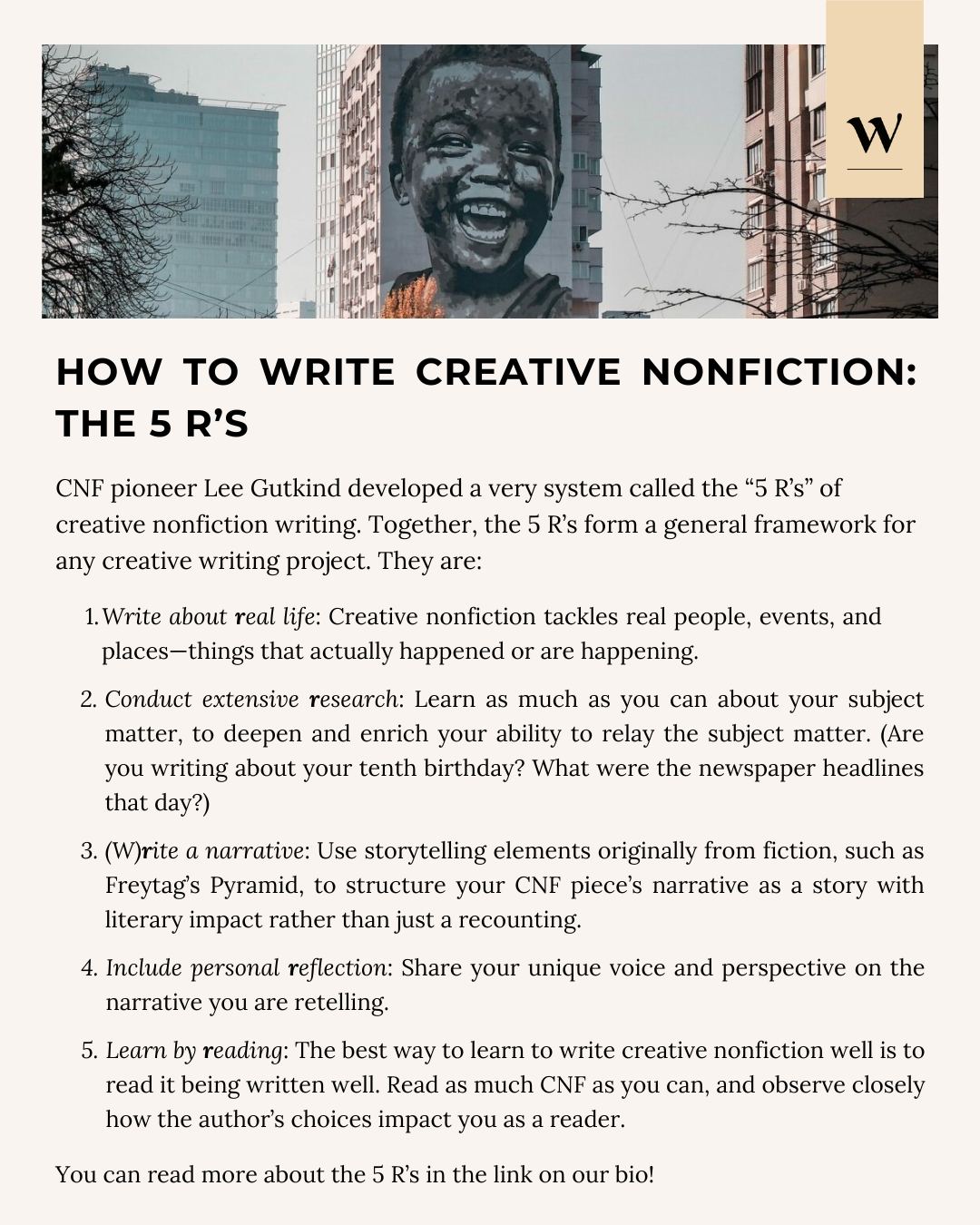
We’re sharing writing tips, creative prompts, and a steady stream of encouragement—follow us @writersdotcom. Click below to check out one of our latest posts on writing creative nonfiction.