Write into the Week: January 18, 2026
Elle LaMarca | January 18, 2026 |
“Art is a lie that makes us realize truth, at least the truth that is given us to understand.”
–Pablo Picasso
 Dear Writer,
I hope you’re having a good start to your week. In this newsletter:
- A writing prompt to inspire your creativity.
- Reading and listening recommendations in fiction, nonfiction, and poetry.
- Publishing, residency, and retreat opportunities available now.
- Join our free Monday and Friday write-ins, and meet our community of writers.
Happy writing this week!
—Elle, Curriculum Specialist & Community Manager
Writer to Writer: The Lying Truth
One of the quiet freedoms of creative writing is that you don’t have to tell the truth in order to tell the truth. Your narrators and characters can lie, distort, justify, forget, or rewrite their own histories—and still reveal something deeply honest about desire, fear, shame, or love. In fact, sometimes a story becomes more emotionally precise when it’s filtered through someone who can’t, or won’t, see themselves clearly.
Writing an unreliable narrator isn’t about tricking the reader. Quite the opposite! It’s actually about trusting them. Trusting readers to feel the gap between what’s said and what’s meant, between the story a narrator tells and the one they’re truly living inside. Your job as a writer isn’t to correct these lies, and never to point them out or explain them to readers. (That’s where the trust part comes in!) Your job is to stay faithful to the voice on the page, even when it falters or bends, and to trust the reader to discover what lives underneath.
Literary Device of the Week: The Unreliable Narrator
An unreliable narrator is a storyteller whose version of events can’t be taken at face value. They may lie, self-deceive, emotionally distort, withhold information, or simply misunderstand what’s happening around them. The result? A story where the truth flickers through cracks in the telling, rather than being stated outright.
You’ve likely encountered this device even if you didn’t have a name for it. Here’s a few examples:
- A character insists they’re “fine,” while their actions quietly reveal the opposite.
- A narrator frames themselves as generous or blameless, but the details of the story suggest otherwise.
- A speaker revises their own memories mid-sentence: That’s not how it happened. Or maybe it is. I can’t be sure.
Writers often use unreliable narration to create tension, deepen psychological realism, and explore how slippery the truth can be—especially when deep emotions or circumstances are involved. If you’d like to experiment with it this week, try one of these:
- Write a scene where the narrator is technically telling the truth, but leaving out the most important part.
- Let your character defend their behavior passionately, then show then reveal the quiet evidence that contradicts them.
- Tell a story twice: once the way the narrator prefers to remember it, and once the way it actually unfolded.
Unreliable narrators remind us that stories aren’t just about what happened—but about how we survive what happened, and the ways we bend the truth along the way.
Writing Prompt:
Write a prose piece or poem from the perspective of someone who believes they are telling the truth. They’re not trying to lie or manipulate the story; they may even see themselves as generous, reasonable, or wronged. Let them retell an important moment—an argument, a betrayal, or a decision they still feel the desire to defend. Allow the narrator to shape the story, and to be confident in their version of events.
As the piece unfolds, let small cracks in their story emerge. Maybe, some detail don’t quite add up, or emotions feel outsized for the moment. Consider why something is skipped too quickly or explained too carefully. Without announcing it, allow another version of the story to emerge between the lines.
Your goal: By the end of the piece, the narrator should remain convinced. The reader should not.
Reading Recommendations: Hobart Edition
Poetry:
- Four Poems by J.L. Moultrie – Read and consider the conversation happening between these four poems by Moultrie, a Detroiter and multi-genre writer. His work has been influenced by the writings of Patti Smith, Sylvia Plath and Hart Crane.
Fiction:
- The Yoga Instructor by Ki Hyun Park – Park uses vivid and, at times, forceful language to tell the tale of a post-breakup affair between student and teacher.
Nonfiction:
- Writers’ Workshop II by Emma Burger – In this short essay, Burger enters a new decade with a broken heart, and returns to her writers’ workshop.
Publishing Opportunities:
- The Sun Magazine – Submission Deadline: February 1, 2026. Seeking submissions for their “Readers Write” section where readers share their personal writing on a given topic. For this deadline, the topic is “The Courtroom.” (If that doesn’t work for you, the March 1 deadline topic is “Lines.” Please see the website for more details, and prompts for each deadline.
- The Berlin Review – Submission Deadline: Rolling. Currently seeking submissions of poetry, fiction and nonfiction for their upcoming issues. The Berlin Review is known for submitting standout work for prestigious literary awards, like the Pushcart Prize.
- Milk Press – Submission Deadline: Rolling. Milk Press is currently seeking submissions of experimental poetry, digital art, video and animation for their winter issue. Milk Press m erges the poetic, visual, and digital art worlds by cultivating, presenting, and publishing multi-disciplinary and collaborative work.
Residency, Retreat & Fellowship Opportunities:
- Emerging Voices Fellowship by PEN America – Application Deadline: January 31, 2026. The Emerging Voices Fellowship provides a virtual five-month immersive mentorship program for early-career writers from communities that are traditionally underrepresented in the publishing world. This is an amazing opportunity for mentorship in the writing and publishing world. See the website for more details!
- The Rabbit Island Residency – Application Deadline: February 22, 2026. This is a unique opportunity for writers and artists whose work intersects with nature and/or conservation. This three week residency is fully funded, and offers a stipend of $4,000. From the website: “Founded in 2010, the Rabbit Island Residency is a platform to investigate, expand, and challenge creative practices in an exposed environment. By living and working on Rabbit Island, residents engage directly with the landscape and respond to notions of conservation, ecology, sustainability, and art.”
Monday and Friday: Free Group Writing Sessions
Come write with us! Community write-ins are a great way to meet other writers, and carve out space in your calendar for your writing.
Monday: Write Into the Week with Elle
Join me (Elle) for an hour of mindset support, goal setting, community, and dedicated time to write! We’ll meet on Monday at 11 AM Eastern time, at this Zoom link: https://us02web.zoom.us/j/83999379617
Friday: Open Write-In
Join the Writers.com staff for a 90-minute writing session each Friday from 11 AM to 12:30 PM Eastern time. We will write together for the first hour. In the last, optional half hour, we’ll share our writing with one another and connect.
To add yourself, join our newsletter using the join box above, and add yourself to the “Friday Write-Ins” list at the bottom of any email. We’ll send you a Zoom link the morning of the call.
Join us on Instagram for more writing inspiration!
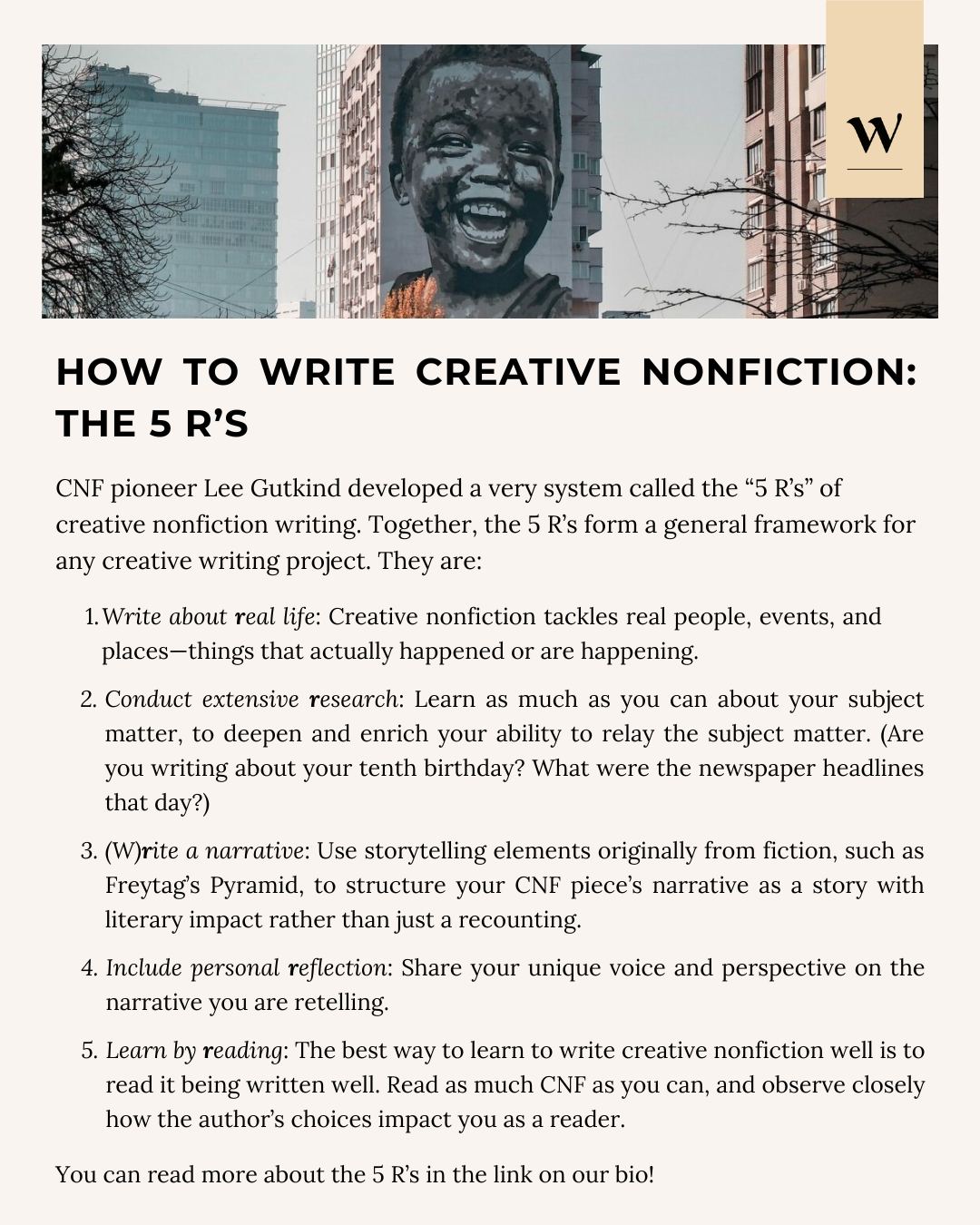
We’re sharing writing tips, creative prompts, and a steady stream of encouragement—follow us @writersdotcom. Click below to check out one of our latest posts on writing creative nonfiction.