Write into the Week: October 11, 2026
Elle LaMarca | October 11, 2026 |
“We are all apprentices in a craft where no one ever becomes a master.” — Ernest Hemingway
 Dear Writer,
I hope you’re having a good start to your week. In this newsletter:
- A writing prompt to inspire your creativity.
- Reading and listening recommendations in fiction, nonfiction, and poetry.
- Publishing, residency, and retreat opportunities available now.
- Join our free Monday and Friday write-ins, and meet our community of writers.
Happy writing this week!
—Elle, Curriculum Specialist & Instructor
Writing Prompt: Write the Wind
A new breeze finally arrived in the Netherlands this week—crisp, cool, and unmistakably autumn. It invigorates my senses, but it also reminds me that winter is imminent, and makes me think about what still needs tending to in my life before the season changes again.
This week, write your wind. What does the air feel like where you are? Is it warm, sharp, restless, heavy, still, or changing? Let the weather become a way into your own life: What does this wind seem to be announcing? What is shifting, and what might need your care before the next season arrives?
You can write this as a poem, scene, essay, or reflection. Let the wind carry you somewhere.
Wordy Facts: Zephyr
A zephyr is a soft, gentle breeze, but the word was originally a name. In Greek mythology, Zephyrus was the god of the west wind, associated with the mild breezes that announced spring and early summer. Over time, his name slipped into English as zephyr, a word for any light, pleasant wind.
As a lover of etymology, I love that this word can carry both weather and mythology inside it. A breeze becomes more than moving air: it’s an arrival, a messenger, a sign that one season is giving way to another. Maybe that’s why we notice certain winds so strongly. They seem to hint at something, or signify change that isn’t always about the weather.
Reading Recommendations
Nonfiction
- “What If There Is No Master Plan For Your Life?” by Kira Homsher via Electric Literature. “I thought I knew the point at which my youth would transform into something else…” but what if it doesn’t? That is the question at the crux of this inventive, varied, and thought-provoking personal essay.
On Craft
- “We Need To Talk About Bad Writing” by Benjamin Schaefer via Electric Literature. Part personal essay, part craft advice, this essay details Schaefer’s story of trying to write amidst the grief following a deep personal loss. Whether dealing with grief or not, it would serve most writers well to lighten the pressure we put on ourselves to always be writing a masterpiece. Sometimes we need to let the writing be bad, before we can make it good.
Interview
- “First Summer Reminds Us That Teenage Relationships Never Fade Away” by Marisa Wright interviewing Ekin Oklap for Electric Literature. Oklap, who best known as an award-winning translator of literature, discusses her debut novel, First Summer. The novel and interview both focus on how early experiences in adolescence can impact our adult lives.
Craft Tip of the Week: Revision
Revision is more than simply editing awkward sentences or correcting typos. Revision can be magical; it can also be extremely frustrating. Instead of allowing yourself to be overwhelmed by revision, think of it as an opportunity to step back, review and reconsider what the piece is trying to do, and make deliberate choices that bring it closer to that intention. Here are a few ways to help you do that:
- Revise from big to small: Before polishing individual sentences, look at the larger structure. Are scenes in the order that best serves your plot? Does the piece begin and end in the strongest places? Is anything missing, repeated, or no longer necessary? Don’t waste time fixes grammar issues or revising sentences, before you’ve addressed major structural issues.
- Identify the heart or core of the piece: Ask yourself, what am I really trying to say? Ask yourself, what feels most essential? Is it the central question, emotional tension, an image, relationship, or idea? During revision, notice which parts deepen that center and which pull attention away from it. Adjust accordingly.
- Read it out loud: Our ears will often catch what our eyes overlook. Reading aloud can reveal awkward rhythms, repeated words, overly long sentences, flat dialogue, and places where writing loses momentum or strays from the narrative.
- Look for places where you’ve explained too much: Writers sometimes repeat an idea because we want to make sure readers understand it, or because we’re trying to understand it ourselves as we write it. That’s perfectly normal in a first draft, but something you will need to revise in subsequent drafts. Trust strong images, scenes, dialogue, and details to carry meaning without always interpreting them afterward. Don’t spoon-feed your readers!
- Give yourself permission to change the plan: Revision may reveal that the piece wants to become something different from what you first imagined. Sometimes revision is a struggle, because we don’t want to let go of that original vision. Be willing to follow what the draft has taught you, and revise from that mindset.
Publishing Opportunities:
- Phoenix Poets – Submission Deadline: October 31, 2026. The University of Chicago Press’s Phoenix Poets series is open to poetry manuscripts, including first and second books, work by more established poets, and poetry in translation. The editors are especially interested in poets who expand the conceptual, formal, and emotional possibilities of poetry; manuscripts must be at least 48 pages, and one first or second book will be selected for the Phoenix Emerging Poet Book Prize.
- The Susan Atefat Editor’s Prize in Poetry – Submission Deadline: October 31, 2026. Peach Literary Journal’s Susan Atefat Editor’s Prize honors work of exceptional craft, emotional integrity, and imaginative reach. For the 2027 poetry prize, writers may submit a suite of 3–5 poems. The winner receives $4,000, publication in Peach, featured placement on the journal’s website, and an author spotlight.
- The Neilma Sidney Short Story Prize – Submission Deadline: December 4, 2026. Supported by the Malcolm Robertson Foundation, Overland literary journal is currently accepting submissions for the 2026 Neilma Sidney Short Story Prize. The winner will receive a $5000 cash prize and publication. Two runners-up will each receive $750. Please see the website for more details.
- The Judith Wright Poetry Prize – Submission Deadline: December 4, 2026. Supported by the Malcolm Robertson Foundation, Overland literary journal is currently accepting submissions for the 2026 Judith Wright Poetry Prize is now open for submissions. First prize is $6000, second prize is $2000, and third prize is $1000.
Monday and Friday: Free Group Writing Sessions
Come write with us! Community write-ins are a great way to meet other writers, and carve out space in your calendar for your writing.
Monday: Write Into the Week with Elle
Join me (Elle) for an hour of mindset support, goal setting, community, and dedicated time to write! We’ll meet on Monday at 11 AM Eastern time, at this Zoom link: https://us02web.zoom.us/j/83999379617
Friday: Open Write-In
Join the Writers.com staff for a 90-minute writing session each Friday from 11 AM to 12:30 PM Eastern time. We will write together for the first hour. In the last, optional half hour, we’ll share our writing with one another and connect.
To add yourself, join our newsletter using the join box above, and add yourself to the “Friday Write-Ins” list at the bottom of any email. We’ll send you a Zoom link the morning of the call.
Join us on Instagram for more writing inspiration!
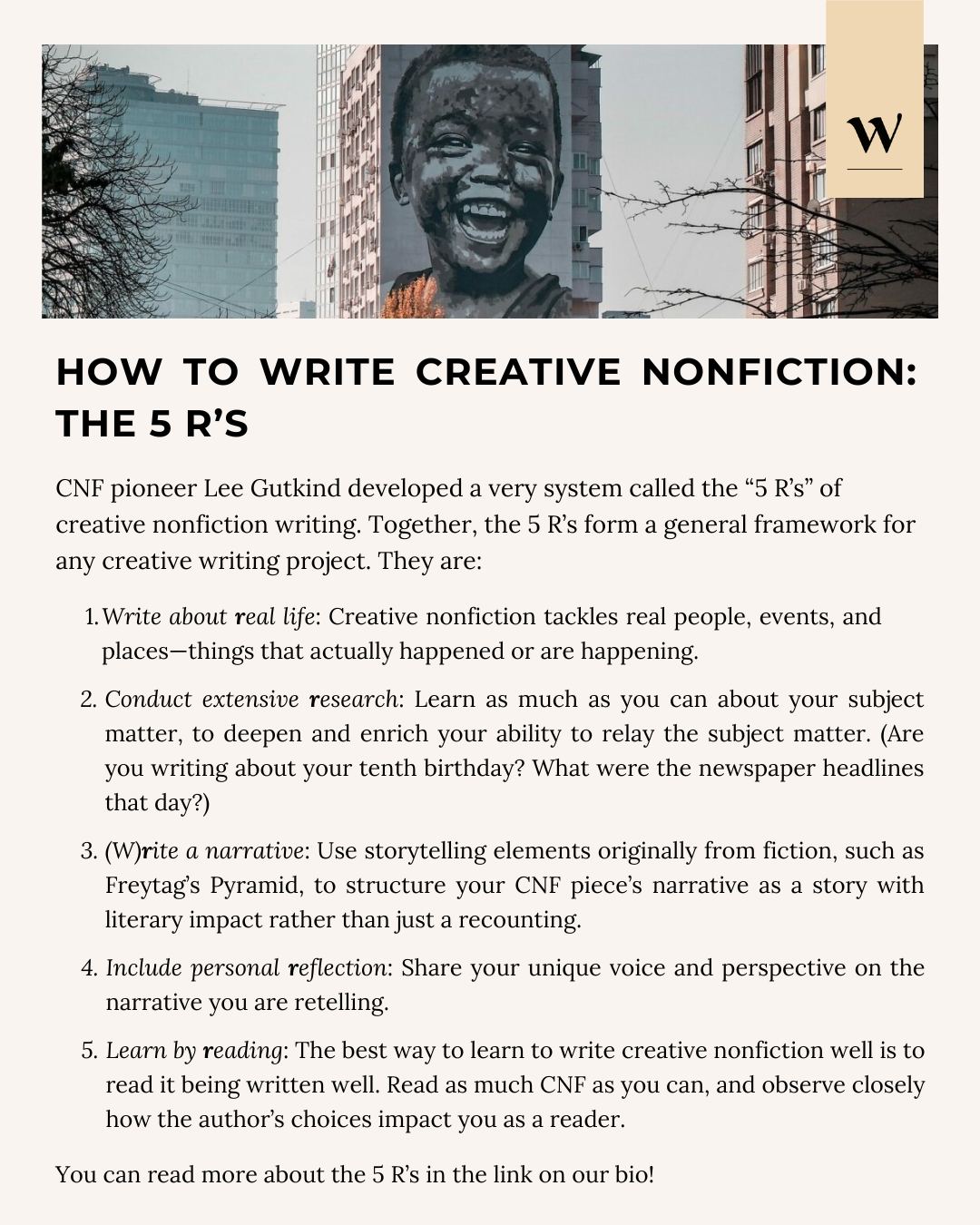
We’re sharing writing tips, creative prompts, and a steady stream of encouragement—follow us @writersdotcom. Click below to check out one of our latest posts on writing creative nonfiction.