Write into the Week: August 30, 2026
Elle LaMarca | August 29, 2026 |
“August rain: the best of the summer gone, and the new fall not yet born. The odd uneven time.” — Sylvia Plath
 Dear Writer,
I hope you’re having a good start to your week. In this newsletter:
- A writing prompt to inspire your creativity.
- Reading and listening recommendations in fiction, nonfiction, and poetry.
- Publishing, residency, and retreat opportunities available now.
- Join our free Monday and Friday write-ins, and meet our community of writers.
Happy writing this week!
—Elle, Curriculum Specialist & Instructor
Writer to Writer: The Last Warm Days
Here we are again, August, reaching your last days in this journey around the sun. The summer season isn’t quite over, but we can already feel the next one beginning to announce itself. September never does arrive quietly. My skin still holds the heat of the sun, and the afternoons still stretch out golden-long, but every so often, a cool breeze slips through and reminds me that change is already on its way.
I always find this seasonal threshold both exciting and unsettling. After so many humid days, dry spells, and heat-heavy afternoons, when the air itself seems tired and listless, I start to long for rain. I want the relief of it, the freshness, the petrichor rising from the ground after the first good downpour. To me, it feels as though the air has been washed clean. But I also know those gray, wet days can become their challenges. Who really likes staying damp for long? Weather doesn’t really understand the rules of moderation.
There are always twenty-four hours in a day and sixty minutes in an hour, but summer has a way of making time feel more generous than it is. The long light seems to loosen the clock’s grip. Mornings can begin with an open window and birdsong filtering in before life wakes up with all of its demands. Soon enough, the windows will close; the birds will leave; the days will shorten. Fall will bring its own energy: sharper, cooler, more structured, and often more urgent.
You likely already know that I’m not just waxing poetic about the weather. Writers and writing can have seasons like this, too. A draft can have a summer feeling. So can a question, an idea, a creative rhythm, or an unfinished project we haven’t quite made sense of yet.
There are times when the work of writing feels more spacious and easy, when we are less concerned with where a piece is going and more willing to follow whatever catches our attention. Not because we take the craft any less seriously, but because there is a certain freedom in not forcing or rushing the process too quickly.
As September approaches, it can be tempting to rush toward the next thing—a new routine, revised goals, a more disciplined schedule— all leading to the more serious version of ourselves we imagine fall will require. There is nothing wrong with wanting structure. Writers often thrive in routine and rhythm. But before we move too quickly into the next creative season, let’s pause long enough to honor what this one still has to offer.
Maybe there is an image, a question, or a feeling from these last warm days that wants to come with you. Maybe there is a piece of writing that still needs a little more time to bake in the sun. The goal is not to hold on to summer forever, but to let its final warmth teach you something before you move on.
As always, I encourage you to be an observer of your own writing process. Notice what is ending, what is beginning, and what thrives in between.
Writing Prompt: Turn and Face the Strange
“Turn and face the strange / Ch-ch-ch-ch-changes ” — David Bowie
Consider using metaphor to describe your own season of change or transition. What is changing for you? What is ending? What is beginning? What exists in the in-between? Is there a strange that you need to turn and face?
If you’d like, have a listen to David Bowie while you spark up some inspiration.
Literary Device of the Week: Pathetic Fallacy
Pathetic fallacy is a literary device in which human emotions, feelings, or traits are attributed to nature, weather, or the surrounding environment. A storm might seem angry. A gray sky may deepen a character’s grief. A sudden shift in wind might suggest that change is coming before it’s revealed in story.
The word pathetic can be misleading here. In this context, it does not mean pitiful or weak. It comes from the Greek word pathos, meaning feeling or emotion. The “fallacy” part refers to the fact that the sky is not literally sad, the rain is not literally grieving, and the wind is not literally warning anyone. But on the page, these emotional associations can feel deeply true.
Pathetic fallacy is related to personification, but the two are not exactly the same. Personification can give human qualities to almost anything nonhuman. Consider examples like a stubborn door, a lonely streetlight, or a sentence that refuses to behave. Pathetic fallacy is more specific than personification. It involves nature, weather, or the environment seeming to mirror, intensify, or participate in human emotion.
For writers, pathetic fallacy can be a powerful way to create atmosphere without over explaining how a character feels. Instead of telling readers someone is anxious, a piece might describe how the air has turned heavy. Instead of announcing that a character is hopeful, it might let morning light slip through the curtains after a long, sleepless night. Used well, the outer world does not simply decorate the scene; it helps carry the emotional weather of the piece.
Publishing Opportunities:
- Carnegie Mellon University Press – Submission Deadline: September 15, 2026. Open call for poetry, fiction and creative nonfiction. This is the first time the Carnegie Mellon University Press has been open to creative nonfiction submissions. This is a great opportunity!
- The Berlin Review – Submission Window: Open. Submissions for The Berlin Review’s next issue are open for short stories, flash, poetry, and essays. The deadline will be announced in around four weeks. Submit now!
Residencies, Retreats & Fellowships
- Ragdale’s Creative Sabbatical – Applicatin Widow: Rolling, until full. This is a rare opportunity for writers and creatives who want a residency experience, but who cannot be away from home for weeks at a time. Ragdale’s Creative Sabbatical runs from December 1-4, 2026. Designed for artists, art administrators and other creatives, these shorter residencies are 4 days and 3 nights, and are open to all disciplines.
- Macdowell Artist Residency Spring/Summer 2027 – Application Deadline: September 10, 2026. Macdowell, the nation’s first artist residency, offers fully-funded residences of two to eight weeks for artists and writers of all disciplines. This is a chance to live and write in community with other artists, and to fully immerse yourself in your creative craft.
- Nightboat Books Editorial Fellowship – Applicatin Deadline: September 13, 2026. Nightboat’s Editorial Fellowship is designed to provide an aspiring editor with $10,000, along with the resources and mentorship necessary to develop and publish a book project of their choosing over the course of two years. Note: This fellowship is for aspiring editors. See the website for further details.
- Vermont Studio Center Residency – Application Deadline: September 30, 2026. Residency applications are now open for the Vermont Studio Center. Artists and writers in all forms and genres are welcome to apply for residencies happening from July to December 2027. All residents receive partial fellowship, and 35% receive fully funded fellowships.
Monday and Friday: Free Group Writing Sessions
Come write with us! Community write-ins are a great way to meet other writers, and carve out space in your calendar for your writing.
Monday: Write Into the Week with Elle
Join me (Elle) for an hour of mindset support, goal setting, community, and dedicated time to write! We’ll meet on Monday at 11 AM Eastern time, at this Zoom link: https://us02web.zoom.us/j/83999379617
Friday: Open Write-In
Join the Writers.com staff for a 90-minute writing session each Friday from 11 AM to 12:30 PM Eastern time. We will write together for the first hour. In the last, optional half hour, we’ll share our writing with one another and connect.
To add yourself, join our newsletter using the join box above, and add yourself to the “Friday Write-Ins” list at the bottom of any email. We’ll send you a Zoom link the morning of the call.
Join us on Instagram for more writing inspiration!
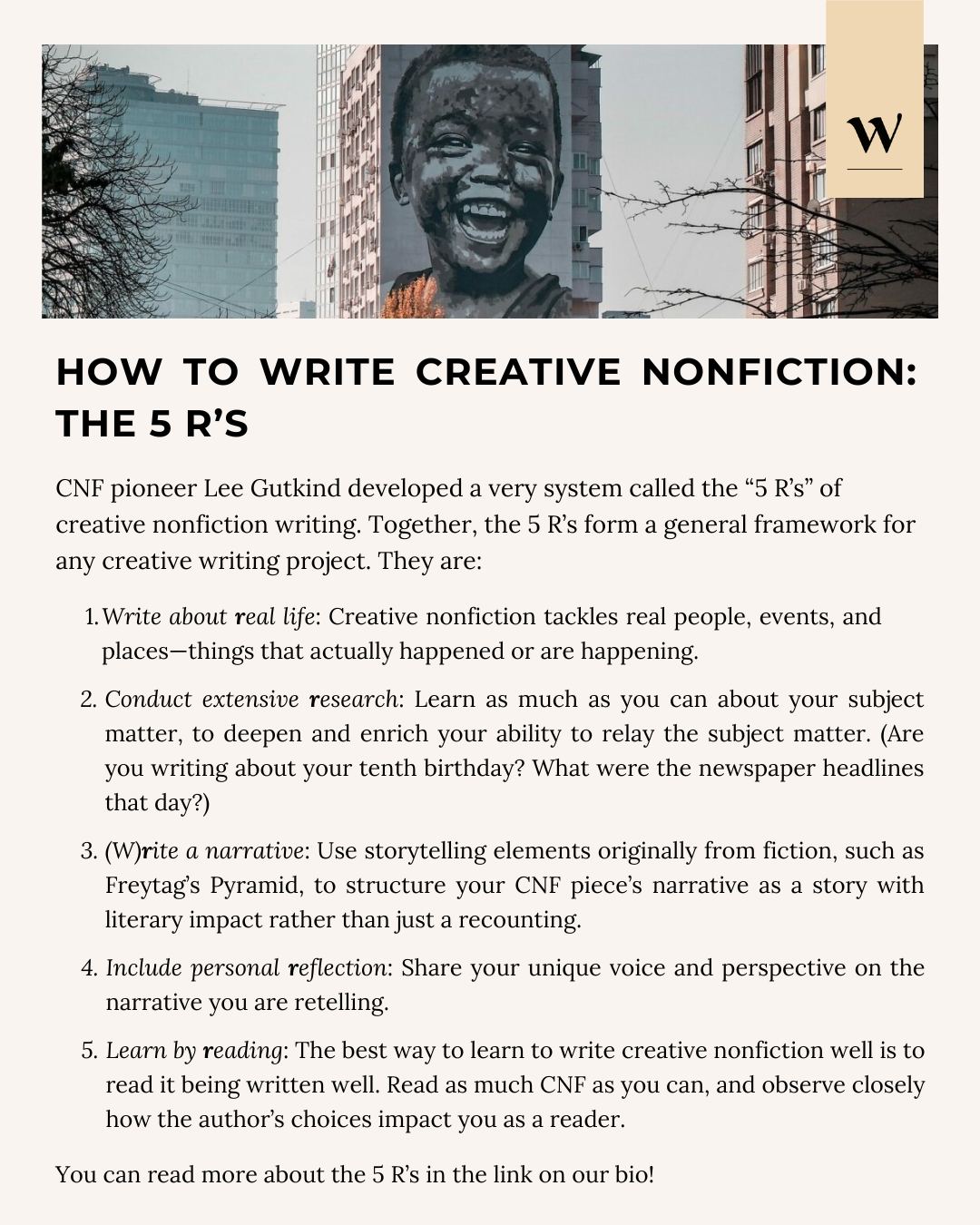
We’re sharing writing tips, creative prompts, and a steady stream of encouragement—follow us @writersdotcom. Click below to check out one of our latest posts on writing creative nonfiction.