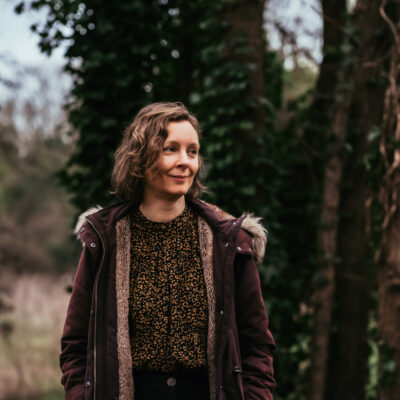
Life Writing: Explore Your Lived Experience in Prose
with Kate Potts

September 30, 2026
Length: 10 weeks
Open to AllText-Based
Original price was: $645.00.$550.00Current price is: $550.00.
“Even if you think you know what the story is, you don’t until you write it.’”
– Melissa Febos
Life writing—literature that shares real-life experience—is more than recording what happened: it’s an act of meaning-making, a way of understanding who you are and how you became yourself. In this course, you’ll be invited into a process of exploration and discovery as you learn how to shape personal experience into compelling narrative. Drawing from memoir, autobiography, autofiction, personal essay, and boundary-crossing hybrid forms, you’ll explore how memory, imagination, truth, and voice intertwine to create work that feels both intimate and artful.
Together, we’ll examine the essential craft questions at the heart of life writing: how to find a narrative voice that feels rooted and alive; how to balance authenticity with shaping and structure; how to move fluidly across time; how to choose detail with intention; and how to give your work a form that serves both the story and the reader. Along the way, you’ll learn how to translate lived experience into writing that resonates beyond the self.
We’ll also engage openly with the emotional and ethical terrain of life writing—the vulnerability of being seen on the page, the complexity of contested or imperfect memory, and the shift from writing purely for yourself to writing with an audience in mind. Your voice and your story will be met with care, respect, and thoughtful attention.
Each week, you’ll receive an original on-demand video or audio lecture, curated readings, discussion prompts, and a generative writing assignment. You’ll have opportunities to share your work, practice feedback and revision, and receive precise, insightful instructor feedback to help you deepen and strengthen your writing.
We will read and discuss the work and reflections of life writers including Mary Karr, Lemn Sissay, Karl Ove Knausgaard, Olivia Laing, Ocean Vuong, Melissa Febos, Olivia Sudjic, Polly Atkin, Bernardine Evaristo, Maggie Nelson, Simon Armitage, Maggie O’Farrell, and Robert MacFarlane. Targeted writing assignments will invite you to try a range of life-writing approaches, generate new material, and expand your craft.
You’ll receive feedback from me on up to 1,000 words in Weeks 1–9, as well as a full chapter or equivalent (up to 3,000 words) in Week 10. By the end of the course, you’ll leave with not only a clearer understanding of life writing’s many forms and possibilities, but also a stronger sense of your own voice, purpose, and direction—along with a wealth of new work that brings your lived experience into sharper, more intentional focus on the page.
Who This Course is For
This course is designed for writers with some experience keen to explore the possibilities of life writing or build on work in progress.
Learning and Writing Goals
Learning Goals
In this course, you will:
- Understand what makes a life writing voice feel engaging and authentic for the reader.
- Understand how life writing and fiction are related, and what kind of truth matters to readers.
- Know how to use showing and telling, honing in and ‘zooming out’ to shape your writing.
- Develop strategies for handling your internal censor and dealing with real and imagined criticism.
- Understand the variety of life writing forms and structures available to you, and how to choose a container that suits your work.
Writing Goals
In this course, you will write:
- Up to 9,000 words of new life writing material.
- An initial chapter or equivalent (up to 3000 words).
- A title, description and draft structure outline for your life writing project.
Weekly Syllabus
Week 1 – Writing as research: life writing methods
In week 1 we’ll consider our own life writing aims, discuss life writing research, and explore some different ways in which writing itself can function as research. In our assignment, we’ll use sensory description as a way in to writing about childhood, and harness the generative power of lists.
Week 2 – Narrative voice
We’ll explore our voices as writers: how they’ve been formed and how we can develop and strengthen them. We’ll listen to, read and write anecdotes and true stories, focusing on the relationship between the spoken and written voice, and the difference having an audience makes.
Week 3 – Realness and authenticity
What do truth and authenticity mean in life writing, and why do they matter? Though reading and discussion we’ll think about the interplay between experience and imagination and learn what kind of truths might matter most to readers. Our epistolary assignment – a letter to someone who will never read it – will continue this exploration of truth and disclosure.
Week 4 – Exposure
How much of our (and others’) lives should we share? In week 4 we’ll consider how we can navigate our internal censors and share in ways that feel constructive. In our writing assignment, we’ll experiment with first and third-person approaches to awkward or difficult subject-matter.
Week 5 – Zooming in and Zooming Out
In week 4 we’ll learn how to judge when to zoom in and use precise, specific detail, and when we should use more of a ‘wide angle’ lens to communicate information. In our writing, we’ll experiment with showing and telling, close-up and summary, to communicate shifts in pace and time.
Week 6 – Form, structure and time
Life writing involves many choices: what to include and leave out, how to shape, form and signpost the material so that it works for the reader. In week 6 we’ll consider different models and options for effective life writing ‘containers’ and learn how to choose an appropriate form and structure for our work. We’ll create draft titles, descriptions and structure outlines for our own life writing projects.
Week 7 – Multiple selves
How can we write convincingly about both past and present selves, or different ‘selves’ within our current lives? In week 7 we’ll discuss the ways writers convincingly portray different selves and the development of selves through time. We’ll write in the voice of a younger self, and then combine their perspective with our own present-day voice.
Week 8 – Character portrayal in life writing
How can we construct and convey characters effectively when they’re rooted in real-life human beings? In week 8 we will consider the complexities of representing real-life others in our writing, and the ways in which we can bring characters to life for our readers. We’ll learn how to strengthen and improve character portrayal through imaginative writing activities.
Week 9 – Writing about place
Place can function in a similar way to character, revealing the topography and environment that’s formed the writer. Through reading, discussion and image-inspired writing, we’ll think about what makes description and evocation of place effective in life writing.
Week 10 – Beginnings: venturing forth
In week 10 we’ll circle back to think about openings and beginnings in life writing. We will share and celebrate our completed first chapter drafts (or equivalent) and consider the different paths through which life writing can find its audience.
Student Feedback for Kate Potts:
Kate is a skilled, generous and sensitive instructor who can guide the dynamics of a writing group to produce work that astounds! She presents well-researched material you want to get your teeth into, stimulating prompts/homework, and excellent feedback and editing suggestions. Brilliant! Caroline Shaw
September 30, 2026
Length: 10 weeks
Open to AllText-Based
Original price was: $645.00.$550.00Current price is: $550.00.