
Excavating Memories in Creative Nonfiction
Margo Steines | May 4, 2026 |
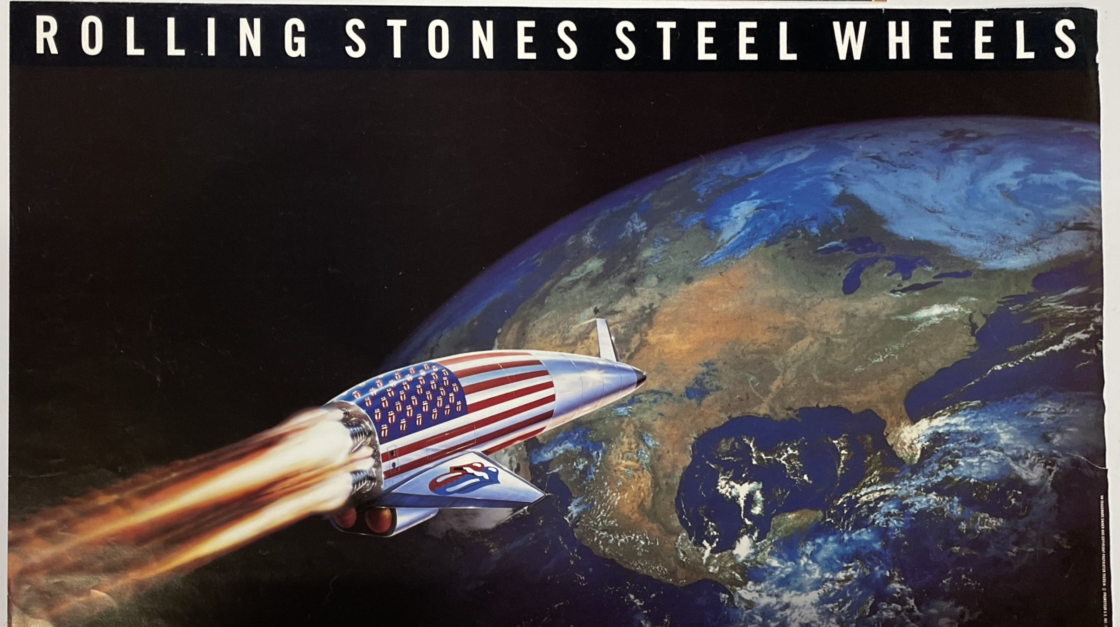
When I was a very little kid, my parents took me to see the Rolling Stones in concert in Hartford, Connecticut. It was the Steel Wheels tour, I got a t-shirt (that I am devastated to have since lost), and it marked a certain coolness on behalf of both my family and Mick Jagger. As an anecdote and a memory, it was foundational to my developing personhood, and to my relationship to my family of origin.
But.
The problem is, it didn’t happen. I learned this, to great embarrassment and existential horror, at a family holiday well into my adulthood. I had a recent boyfriend in tow and, as I began to (annoyingly) tell the story (which the boyfriend had already heard) so that my dad (a lifelong Stones fan) could jump in and add some color commentary, it quickly became clear that there were competing narratives in my family about the Steel Wheels tour.
“We didn’t take you!” my father exclaimed (much less cool than the version of him I’d constructed in my retelling of the story). “You were like 5! We went—you stayed with a babysitter. We got you a t-shirt!”
I was, and I cannot emphasize this enough, in utter disbelief. I was devastated, not that I hadn’t seen the Rolling Stones on tour during their heyday (I mean, I was and am still a little sad about that), but that a foundational memory that I had never once even thought to question could have been invented out of a long-lost band shirt and some appropriated anecdotes. This was not like getting caught in a lie—this was like getting caught in a break with reality.
This was like getting caught in a break with reality.
From that incident (which I factchecked rigorously—turns out my dad was right), I began to think more critically and deeply about memory: what it is, how it functions, and how we can use it on the page in nonfiction without veering into narratives that are inadvertently fabricated.
*
When we write about our lived experiences in creative nonfiction, we write about a complicated web of emotional, experiential, and often cultural occurrences and processes. Writing, particularly writing personal narrative, is a complex process that asks us to engage cognitively, artistically, and emotionally.
Memory is crucial to first person narrative—it shares a root with the word memoir, and is the basis of personal writing across nonfiction forms. Whether something happened in your childhood or fifteen minutes ago, attempting to return to an experience that has since ended is both a key element of bringing your life to the page, and also a very hard thing to do.
We miss as much as we catch, and our brains “help” by filling in the gaps.
Even the idea of memory is fraught—most people (as I did prior to The Rolling Stones Incident) tend to think of the memory as a recording device, but if you look at research across disciplines, and at phenomena like the absolute failure of accuracy in much eyewitness testimony, and if you consider your own experiences, it quickly becomes clear that we miss as much as we catch, and our brains “help” by filling in the gaps. (Source: lived experience in family therapy.)
Exercise: Memory Excavation for the Writer
Here’s a memory practice that I’ve developed and honed for my own writing practice. It has allowed me to write about experiences that I only remember parts of and experiences I questions, and to bring embodiment into my pursuit of unpacking the truth of my own lived experiences. I call it Memory Excavation for the Writer.
To begin, spend a few minutes thinking about the memory you want to excavate. As you practice this initially, I strongly suggest choosing a memory that is not wildly traumatic or activating—returning to the site of trauma or grief can be very activating, and sitting alone on a computer is not a supportive container for that kind of work, so I suggest selecting a memory that isn’t particularly spicy for you.
Begin your writing session with a body scan, moving sequentially through your body and noticing everything there is to notice. I invite you to close your eyes, or to soften your gaze if eyes closed isn’t comfortable for you. Start with your feet, place them on the floor if that’s accessible for your body, and notice how they feel. You’re just noticing and observing—there’s no wrong way to do this.
From there, move up the body, noticing your calves… thighs… butt… pelvic floor… belly… chest… shoulders… arms… hands… fingers… faces… heads.
Now that you’ve attuned to your body, notice what you observe: How does the floor feel under your feet? How does the air feel on your skin? How does the chair/couch/etc you are sitting on feel under your body?
Begin to open your eyes, and when you’re ready, look around your space. Allow your eyes to take in all the details, colors, sensations. Let your gaze follow what it is attracted to. Feel free to move your head and neck as well as your eyeballs.
Notice your sense of hearing. Listen for any noises.
Notice what you smell.
Notice what your mouth tastes like.
Ask yourself, of everything you notice, how it makes you feel. Do you like it? Dislike it? Feel neutral?
Enter the space of the memory as if it were a theater set.
Once you’ve used this practice to ground yourself in your body and your space, it is time to begin writing. Before you pick up your pen/keyboard, again close your eyes or soften your gaze. Bring your attention to the memory you plan to write about (or the initial shard of memory, if it feels sketchy or faint). Notice everything you can about the memory itself. Enter the space of the memory as if it were a theater set. Walk around. Touch the objects. Smell the air. Hear the sounds. Look around the space of the memory, and feel the embodied experience of what happened. Spend as much time as you need to there—sometimes if you linger, more will be revealed.
Begin to write what you notice, and as you do so, resist filling in blanks—instead, remember that it is the nature of memory to include blank spots, and simply note their existence.
Feel free to write in a fragmented and/or stream of consciousness style. Do your best to keep your pen/keyboard moving without stopping as you work. This is not art—you are simply generating data. Later, you can shape and form it.
As you work, remember to attend to the five senses, as well as to the senses of proprioception (awareness of the body in space) and interoception (sensation and signals that come from within the body). What do you recall from the experience, and how is your body responding to the act of remembering? Write it all down, even if it doesn’t yet make sense. Later, you can decide how to incorporate what you discover into your larger body of work on the page.
*
There’s an irrational part of me that still really believes I was at the Steel Wheels tour. There were so many things I could recall: the way the sweat shook off Mick’s body when he grabbed the mic, the way “Start Me Up” sounded live. But, crucially, I couldn’t remember: how we got there, if we stood or sat, anything I ate or drank, anything my parents said or did, what the bathroom situation was. I’d grabbed my father’s stories, which he likely regaled me with, and blurred them with album art and stuff I saw on VH1, and from there I inadvertently constructed a fiction.
One of my big takeaways as a self-researcher and fact checker is to apply pressure to the mundane parts of a memory. If I can only remember the iconic moment, and nothing about how I ate, drank, parked, or used the bathroom, the memory warrants a closer look.
I wish you truth in your writing, and real moments with lesser-known bands at appropriate ages.
xo,
M

Thank you for sharing your story. I have also had memories that my siblings say didn’t happen. Thank you for the exercises you shared to excavate true memories. Very helpful!
“It was all make-believe that he had lived on, and when the truth shattered it he thought reality itself was shattered.”
— W. Somerset Maugham
WSM also said “Fact and fiction are so intermingled in my work that now, looking back on it, I can hardly distinguish one from the other.”
Perhaps I am misreading this, but it sounds like not remembering what you ate somewhere is a sign you weren’t there? Or do you have to not remember each and every one of those types of details for it to be false. What if there were no stories about it from others. You were the only one who told those stories over the years? What if actual conversations and the location are vivid, but not the details of the surroundings? There are several I have but how I got there is really perplexing to me. Perhaps nothing more than some random boyfriend who has disappeared from these memories because he was much less impressive than the context.
Thank you for the brilliant exercise!