Surprise! in Poetry: Building Oomph into your Practice
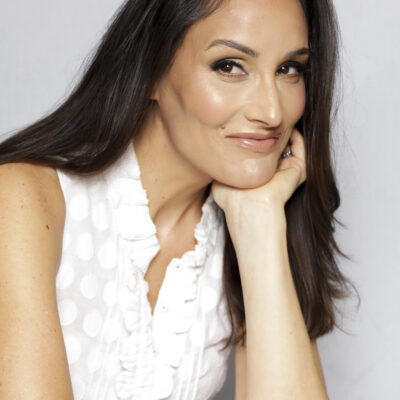
with L.J. Sysko
September 23, 2026
Length: 4 weeks
IntermediateText and Live Video
Zoom calls Wednesdays from 7-9 PM Eastern.
$345.00
$345.00Enroll Now
In poems, all things are possible—if we can…surprise!
By observing how startling contemporary poems move—how they’re structured—we can learn a lot in a short time about how to make the seemingly impossible possible in our own work. If you want to add some new moves to your poetic repertoire, this course is for you.
This workshop will explore the phenomenon of a successful poem’s power—that thing readers register as “OOMPH”—beginning with “the turn,” a term borrowed from the sonnet, followed by juxtaposition, antithesis, reversals, transmogrification, point of view, and more. Together, we’ll seek new sleight of hand to add to our own magic.
Each week, you’ll explore the dynamics of surprise in poems, popping a bit of the unexpected into your poetry through unique and fun generative prompts. Each live session will include workshop, close reading, and discussion about selected published poetry; prompts between sessions are designed to help us shift our work’s emphases. You’ll draft new work and workshop three poems.
Who This Course is For
This course welcomes poets of intermediate experience who have the ability/some vocabulary to analyze a poem, looking at how its composition shapes meaning. No advanced degree or publication experience necessary–just enthusiasm for technical observation in poetry.
Direction and Feedback
A large portion of Zoom class time will be workshop, where you’ll receive in-depth feedback on your work and practice giving feedback to others. There are three workshop sessions in total, and you’ll be workshopped twice with a third written critique provided by me. Detailed prompts will be provided as we go and you’ll likely wish to submit fresh drafts in response, but revisions of earlier or “finished” poems are also fair game–your prerogative! This will be a safe space where all poems are honored, and you’ll be invited to experiment.
Zoom Schedule
We will meet each week on Zoom on Wednesdays from 7:00-9:00 PM Eastern.
Learning and Writing Goals
Learning Goals
In this course, you will:
- Understand how surprise affects readers’ emotional and intellectual engagement–to help you write more powerful poems.
- Explore the work of canonical and contemporary writers whose poems exemplify poetry’s arresting potential.
- Engage in the act of providing feedback to peers, learning in the process how to better and more swiftly identify opportunity in your own work; you will also receive feedback from peers and the instructor, practicing judicious receptivity.
- Expand your knowledge of poetic craft through readings, discussion/lecture, writing practice, and suggested resources for further study.
Writing Goals
- Write, workshop, and receive feedback on three new poems.
- Open yourself to new possibilities and craft strategies for technical enactment of surprise.
Weekly Syllabus
Week One: Surprise and The Speaker
We will begin with a reading of Gregory Soto’s “Oranges,” pinpointing how and where the poem establishes expectation and then undermines it. We’ll discuss the importance of understanding that poems have a “handedness” that is inherently double: the point-of-view of the speaker and that of the (ostensibly invisible) poet. In some poems, these feel unified and harmonious and in others, wildly divergent. This is a consideration we can apply to the voices resonant in our own work. We will finish by writing in class, responding to a generative prompt designed to help us rough up our poet-speaker habits. We’ll take a look at poems by Katie Condon, Mary Szybist, Christopher Salerno, Lucille Clifton, and Theodore Roethke.
Assignments:
1) Complete a rough poem draft in response to our first class session’s generative writing exercises. Submit your poem to me for workshop during next class session.
2) Finish reading the Suprise and The Speaker packet.
Week Two: Surprise and The Image
Once we discuss how your favorite poems from the Surprise and The Speaker packet struck you, we’ll begin to identify how your speaker approaches the page, and then: we’ll supply them with imagery. During this class, talk will focus on the emotional charge inherent in the image. (Ezra Pound called image “the objective correlative;” we’ll call it…inexpensive emotional labor.) Finally, Workshop #1 in which students will both give and receive feedback on their drafts will comprise the bulk of class time.
Assignments:
1) Read Surprise and The Image Packet: Yusef Komunyakaa, Marie Howe, William Carlos Williams, Jack Gilbert, Rita Dove, and Brigit Pegeen Kelly.
2) Engage with an Imagery generative writing exercise designed to result in a new draft or an edited existing draft. Submit your poem to me for workshop during next class session.
Week Three: Surprise and Structure
We’re ready to put it all together, almost. Here, we lean into a discussion about how image and the speaker can engage in the most streamlined dance–through editing. We will then dive into Workshop #2, giving and receiving feedback on student work. Class will conclude with a lesson on Structure.
Assignments:
1) Read The Surprise and Structure Packet: with poems by Natalie Diaz, Ilya Kaminsky, Jericho Brown, June Jordan, and Sylvia Plath.
2) Draft a new poem or edit one of your existing workshop poems using the provided Limiting prompt. Submit your poem to me for workshop during next class session.
3) In advance of our last class, I invite you to select one of your “well-finished” poems, examining it for revision according to poetic surprise. Look to shake up your usual choreography. Jot some notes in their margins, providing breadcrumbs for you to follow when you return and edit.
Week Four: Surprise, a Poem is Born!
What is the most significant takeaway from the course for you and your future poems? After we hold Workshop #3 and discuss what we learned about Structure, we will conclude with Q&A, sharing observations about technical opportunities in drafting and editing to prepare your work for submission.
$345.00Enroll Now
Student Feedback for L.J. Sysko:
Writing poetry through the lens of poetic temperaments with L.J. Sysko was a deeply introspective experience. The prompts were fun, provocative and challenging while also providing a framework to get outside of comfort. Overall, the format teaches the poet to look at their own expression in a way that may be more personal than other classes. Raina S.
LJ was amazing – she challenged and inspired us, set a fast pace for the course, and was generous with feedback and expertise. I particularly liked the way she structured the homework readings and her prompts were super interesting and unique.
September 23, 2026
Length: 4 weeks
IntermediateText and Live Video
Zoom calls Wednesdays from 7-9 PM Eastern.
$345.00
$345.00Enroll Now