Finding Your Poetic Temperament: Unlock Your Most Powerful Poetry
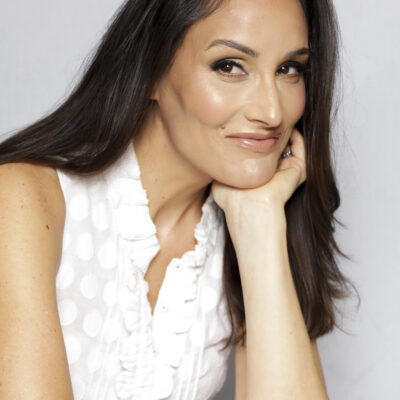
with L.J. Sysko
July 29, 2026
Length: 4 Weeks
Open to AllText and Live Video
Zoom calls Wednesdays from 7-9 PM Eastern
Original price was: $345.00.$295.00Current price is: $295.00.
Activate Your Poetic Personality Type.
Ready to kickstart your writing practice by identifying your Poetic Personality? Each week, you’ll explore one of Four Temperaments, practicing on your own poems as you seek confidence and impact.
Here’s how the Poetic Temperaments work: poet Gregory Orr wrote an essay in the 1980s about a poem’s relative emphasis across four concerns: Imagination, Story (Narrative), Music, and Structure. If these are anything like the Myers-Briggs of Poetry Personality–and I swear they are!–order is key.
Maybe I’m an I-N-M-S (Imagination-Narrative-Music-Structure) when I draft, but my editing process recruits other temperaments (even inverting them?!), providing permissive oomph or a guiding constraint. How about you?
This workshop will delve into the practical uses of a self-conscious schema such as this, knowing that there are no correct answers, only useful observations about our work, our process, and where buried breakthroughs may lie. We’ll begin generating new work based first on our strongest temperament before editing toward what we practice least, experimenting with all four temperaments along the way.
Each session will spotlight one of the four temperaments, involving close reading and discussion from selected example poems along with generative prompts designed to help us shift our work’s emphases. Students will receive critical feedback on three poems.
For poets of all levels.
How It Works
In-class craft talks will be structured and themed around Greg Orr’s essay, “Four Temperaments and the Forms of Poetry”: we will begin with the foundations, move on to Limitless impulses (Music and Imagination), draft new work appealing to our own prevailing Temperament using generative prompts, learn about the Limiting impulses (Story and Structure), edit by seeking tension in the poem, appeal to our latent Temperament in revision, and aim to fulfill the “project of the poem” with readers in mind.
A large portion of Zoom class time will be workshop, where you’ll get in-depth feedback on your work and practice giving feedback to others. There are three workshops in this course and you’ll be workshopped twice (with instructor providing personal written critique on a third poem). You will submit poem drafts to the instructor in advance of each class so that an optimal order and “first read” surprise can be enjoyed together in class. In workshop, you will receive feedback on three poems (note: you may wish to submit fresh drafts, revisions of earlier drafts, or previously “finished” poems–all fair game and this is your prerogative!). You’ll practice giving feedback to your fellow writers and I always counsel workshoppers that you learn more from hearing others’ poems workshopped–at least more immediately and dispassionately–so we will be engaged, thoughtful, and respectful readers of all our peers’ work. This will be a safe space, where all poems are honored, and you’ll be invited to experiment.
Who This Course is For
Whether you’re just beginning or returning to your craft, this course welcomes poets of all experience levels who are ready to explore new creative approaches while developing confidence and power in their writing.
Learning and Writing Goals
Learning Goals
In this course, you will:
- Understand how to activate your creative habits of mind to write more powerful poems.
- Develop a deeper understanding of how four aspects of poetic craft can inspire and shape your writing-editing processes as well as reader response.
- Explore the work of historical and contemporary writers whose poetry epitomizes the temperaments in harmonious tension.
- Engage in the act of providing feedback to peers, learning in the process how to better and more swiftly identify opportunity in your own work; you will also receive feedback from peers and the instructor, practicing judicious receptivity.
- Expand your knowledge of poetic craft through readings, discussion/lecture, writing practice, and suggested resources for further study.
Writing Goals
- Write and workshop/receive critique on three new poems.
- Create a queue of potential future revisions from among your finished work, seeing new possibilities for temperamentally minded tension.
- Develop a customized Four Temperaments rubric to motivate your editing practice.
Zoom Schedule
Wednesdays, July 29th-August 19th, from 7-9 PM EST
Weekly Syllabus
Week One: The Four Temperaments: Introduction to Narrative-Imagination-Structure-Music
What are The Four Temperaments?
We will begin with a reading of Pablo Neruda’s “Horses,” pinpointing how and where the Four Temperaments appear on this poem’s personality profile for each of us. Then, we’ll dip into Gregory Orr’s essay, which originally outlined “The Four Temperaments,” before considering the order in which they tend to appear in our work. We will finish by writing in class, responding to a generative prompt designed to help us both confirm and play with our prevailing poetic temperament.
Assignment
1) Complete a rough poem draft chosen from among our first class session’s generative writing exercises. Submit your poem to me for workshop during next class session.
2) Finish reading the Greg Orr essay.
Week Two: Harnessing Power in Your Temperament: Prevalence & Latency (rather than Strength & Weakness)
Once we begin to acknowledge the pull of our prevailing Temperament on the page, how do we let it sing through more clearly in our poems? During this class, talk will focus on trust in the “impasto:” quick drafting led by our prevailing temperament. We will discuss your favorite passages from the Orr essay before moving into Workshop #1, giving and receiving feedback on student work. Class will conclude with a lesson exploring what Orr called Limitless impulses: Music and Imagination. We’ll take a look at poems by Paige Lewis, Diamond Forde, Maya C. Popa, Caroline Bird, David Berman, and Danez Smith.
Assignment
1) Read The Limitless Packet.
2) Engage with a Limitless generative writing exercise designed to result in a new draft or an edited existing draft. Submit your poem to me for workshop during next class session.
Week Three: A Complex Choreography: Writing & Editing Temperamentally
Once we have identified our Prevailing Temperament and practiced with it a little, we’ll be ready to consider its counterpoint–the Temperament that exerts crucial tension. Here, we lean into editing. We will take a look at examples of poems in draft form (Marianne Moore and Elizabeth Bishop), examining how temperament factored into the editorial refinement of the poem. We will then dive into Workshop #2, giving and receiving feedback on student work. Class will conclude with a lesson exploring what Orr called Limiting impulses: Story (Narrative) and Structure. We’ll take a look at poems by Gerald Stern, Todd Dillard, Patricia Smith, Richie Hofmann, Donna Stonecipher, and Victoria Chang.
Assignment
1) Read The Limiting Packet.
2) Draft a new poem or edit one of your existing workshop poems using the provided Limiting prompt. Submit your poem to me for workshop during next class session.
3) In advance of our last class, I invite you to nominate one or two of your “well-finished” poems, examining them for revision opportunity using your newfound comprehension of your poetic personality. Jot some notes in their margins, providing breadcrumbs for you to follow when you return and edit.
Week Four: Harmonious Tension: When's the Poem Finished?
Powerful and memorable poetry, Orr suggested, derives from tension/harmony between limitless and limiting impulses. What do you think is the key? Are the limiting impulses wholly limiting? Are the limitless impulses solely expansive? Let’s talk about how and where The Four Temperaments as discrete units of craft ultimately break down for us. And they do; they must, if we’re lucky. We will hold Workshop #3 and conclude with an invitation to use a Four Temperaments Rubric for analyzing technical opportunities in your work before submitting it for publication.
*Note that two of your three poems will be workshopped in class by the entire group while the instructor will provide personal, written critique on a third.
Student Feedback for L.J. Sysko:
July 29, 2026
Length: 4 Weeks
Open to AllText and Live Video
Zoom calls Wednesdays from 7-9 PM Eastern
Original price was: $345.00.$295.00Current price is: $295.00.